Single-sided printing prevents bleed-through from ruining another illustration, but it does not stop ink staining the next sheet. The solution is simple: know your marker, prepare a suitable barrier and let the page dry before closing the book.
1. Check which kind of marker you are using
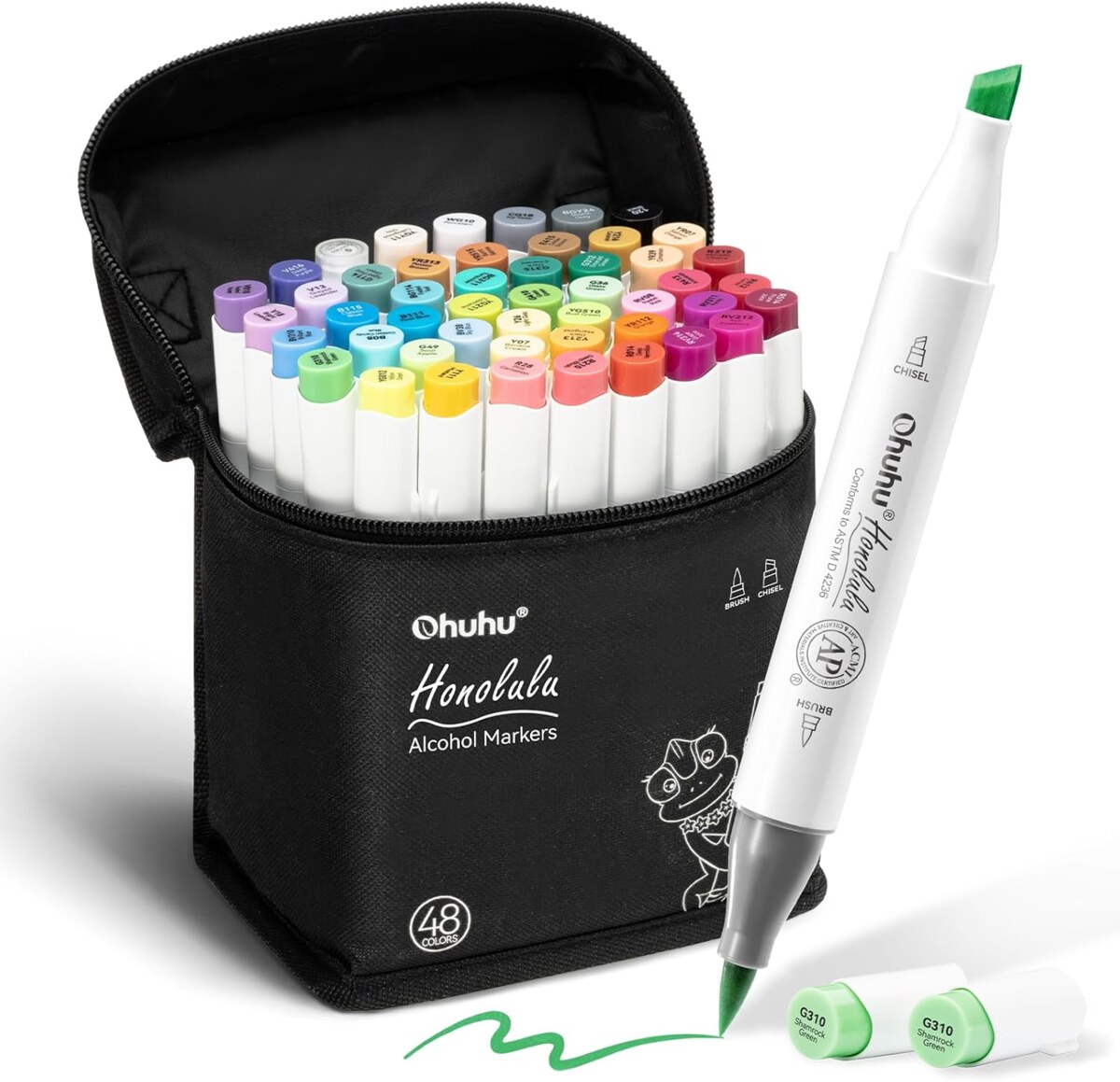
Alcohol markers create intense colour and smooth blends, but their ink usually passes through colouring-book paper easily. Water-based markers tend to bleed less, although repeated strokes can dampen or buckle the page. Paper also changes the result.
2. Test before you begin
Try the marker on a swatch page, an inconspicuous area or a sheet with similar paper. Wait a few seconds and inspect the reverse. Check not only the colour, but also how far the ink spreads and whether it passes through completely.
3. Place a barrier behind the page
Insert a protective sheet between the page you are colouring and the next one. A thin plastic sheet, trimmed document wallet, acetate or laminated card can work. It should cover the entire area beneath your illustration.
Ordinary paper may not be enough for alcohol markers: it can soak up the ink and still let it reach the page below. If you use card, inspect its reverse during the session.
4. Keep the protector from moving
Align the barrier with the book's inner edge and let it extend slightly beyond the other three sides. If the page shifts, hold it with a soft clip or low-tack tape outside the drawing without forcing the spine.
5. Work from light to dark
Starting with light shades reduces repeated strokes and reserves extra layers for shadows. With alcohol markers, colour small areas while the edge remains damp to avoid hard lines, but do not soak the paper.
6. Let the page dry before removing the barrier
The surface can look dry while the reverse is still damp. Wait a few minutes, check carefully and lift the protector without dragging it. Do not close the book or place another page directly over the illustration straight away.
7. Store a protector inside the book
Clean a reusable sheet after your session and keep it inside the book. It will be ready next time and you are less likely to begin colouring without it.
Quick checklist
- Identify whether the ink is water- or alcohol-based.
- Test the colour and two layers on similar paper.
- Place a waterproof barrier beneath the entire page.
- Check that it cannot move while you colour.
- Let the page dry before closing the book.
What if a stain has already appeared?
Do not rub damp paper, as this can damage it or spread the ink. Separate the pages, allow them to dry fully and place absorbent paper underneath. A mark on the reverse does not prevent you from enjoying the illustration, especially in single-sided books.