Your tool changes the way you approach an illustration. Pencils let you work slowly and make adjustments; markers cover areas quickly and create more uniform colour. It helps to understand what each option offers before buying a large set.
Coloured pencils: precision and control
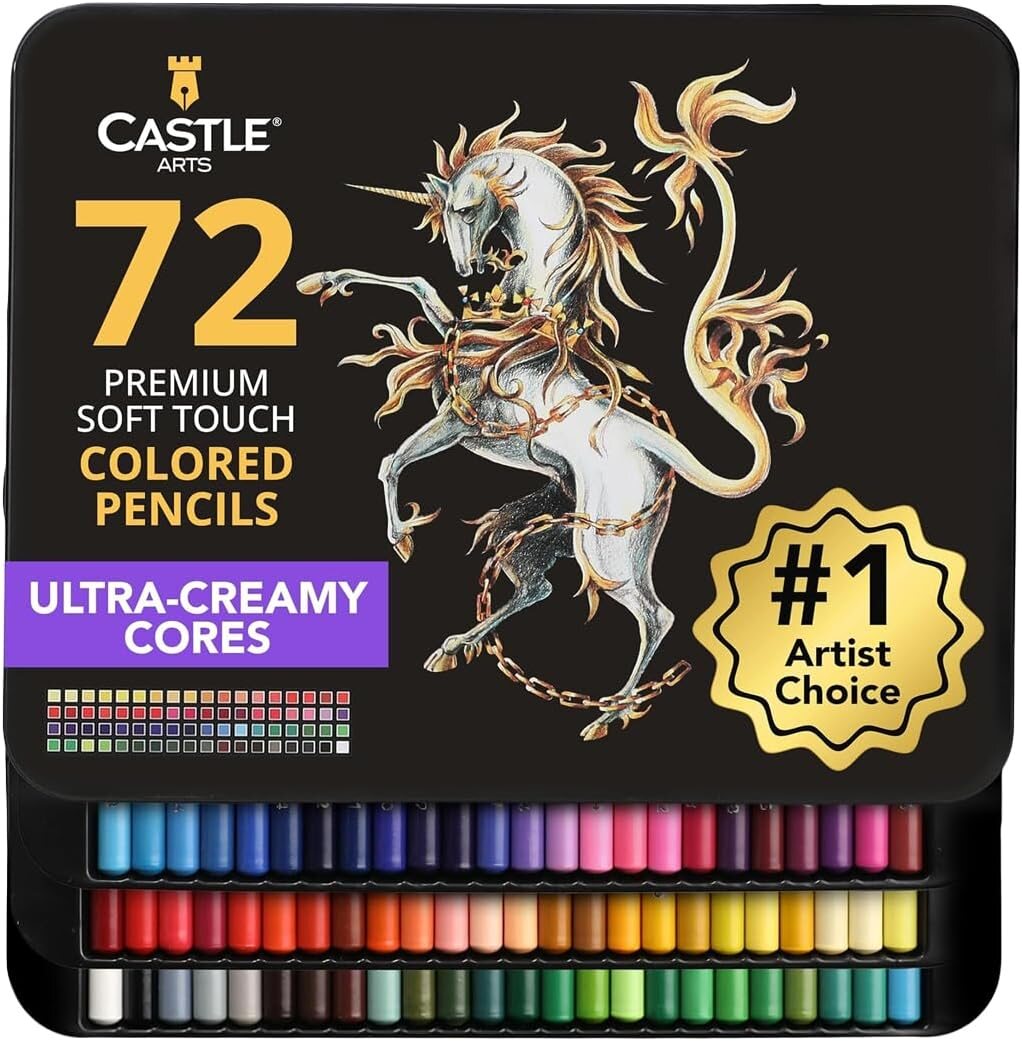
They are the easiest option for beginners. You can start with light pressure, build several layers and darken only the areas that need it. They also make small details easier to manage.
Pencils work particularly well for portraits, mythological creatures, gradients and detailed scenes. Their finish keeps the texture of the paper and can range from soft to intense.
Water-based markers: versatile and low-odour
They provide bright colour and are comfortable for long sessions. A fine tip is useful for details, while a brush tip covers medium areas. They suit children's books, simpler designs and anyone who prefers to avoid the smell of alcohol ink.
Avoid going over the same spot too many times: excess moisture can roughen some papers or leave streaks. Always test the colour first.
Alcohol markers: intensity and smooth blending
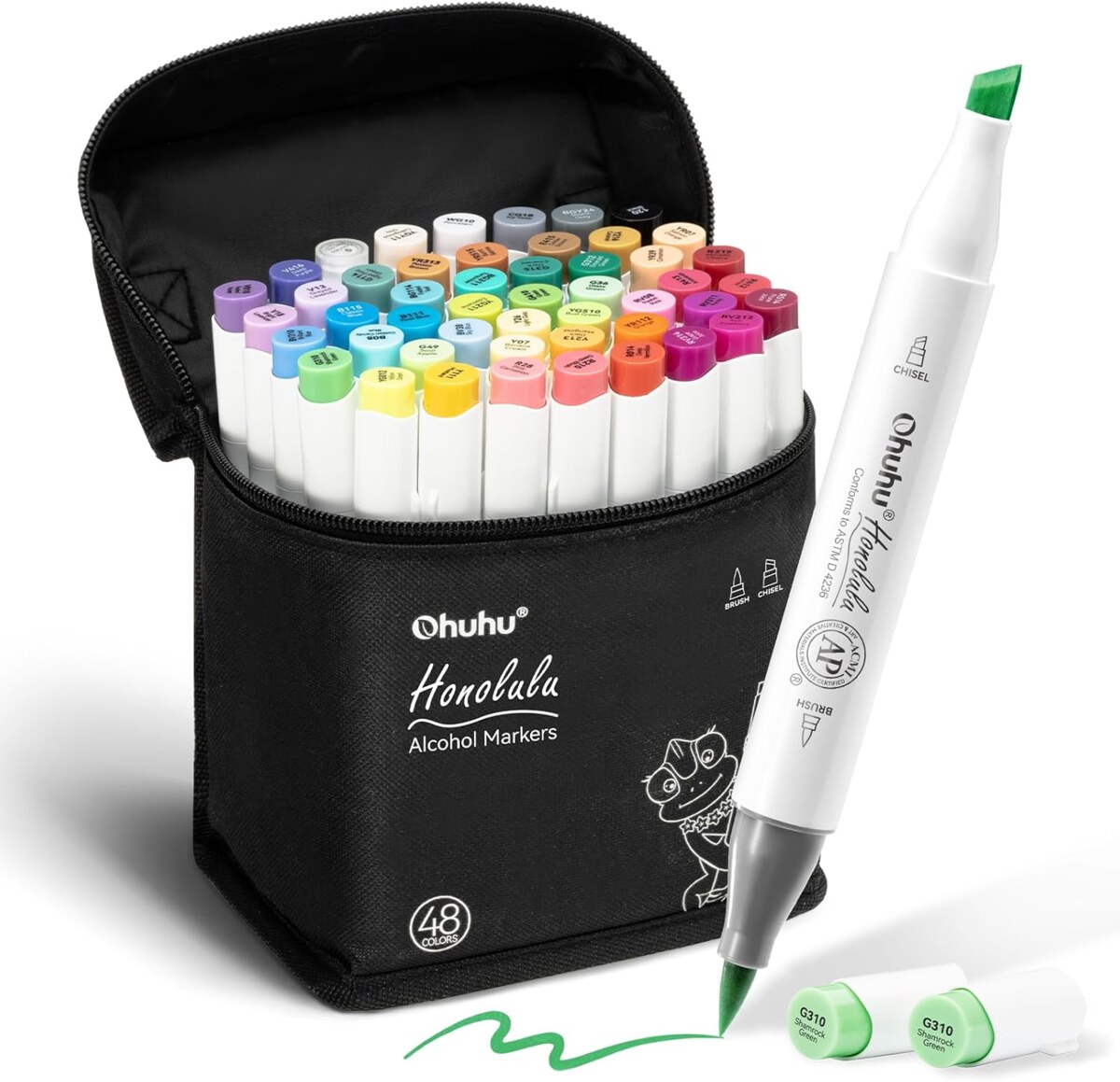
They cover quickly, create even colour and blend smoothly while the ink is still wet. They are attractive for fantasy art, portraits and large areas, but need more planning because the ink sets quickly.
Alcohol ink usually bleeds through paper. A single-sided book protects the next illustration, but not the following page. Place a thick protective sheet beneath your work before you begin.
Quick comparison
| Material | Best for | Keep in mind |
|---|---|---|
| Pencils | Control, details and layers | They take more time |
| Water-based markers | Bright colour and easy use | Paper can become damp |
| Alcohol markers | Coverage, blends and gradients | They bleed through paper |
Which material suits each page?
Start a detailed portrait or textured gargoyle with pencils. Use water-based markers to fill bold children's dinosaurs with ease. For dragons, griffins or landscapes with broad skies, alcohol markers offer intense transitions when the page is protected.
You can combine them
You do not have to choose only one. A simple method is to create an even marker base, then add shadows, texture and small details with pencils. Test first, as pencils behave differently over different inks.
The simple starting choice
Choose coloured pencils if you want control and are still finding your style. Try water-based markers for quick, bright results. Save alcohol markers for experimenting with blends when you have suitable page protection ready.